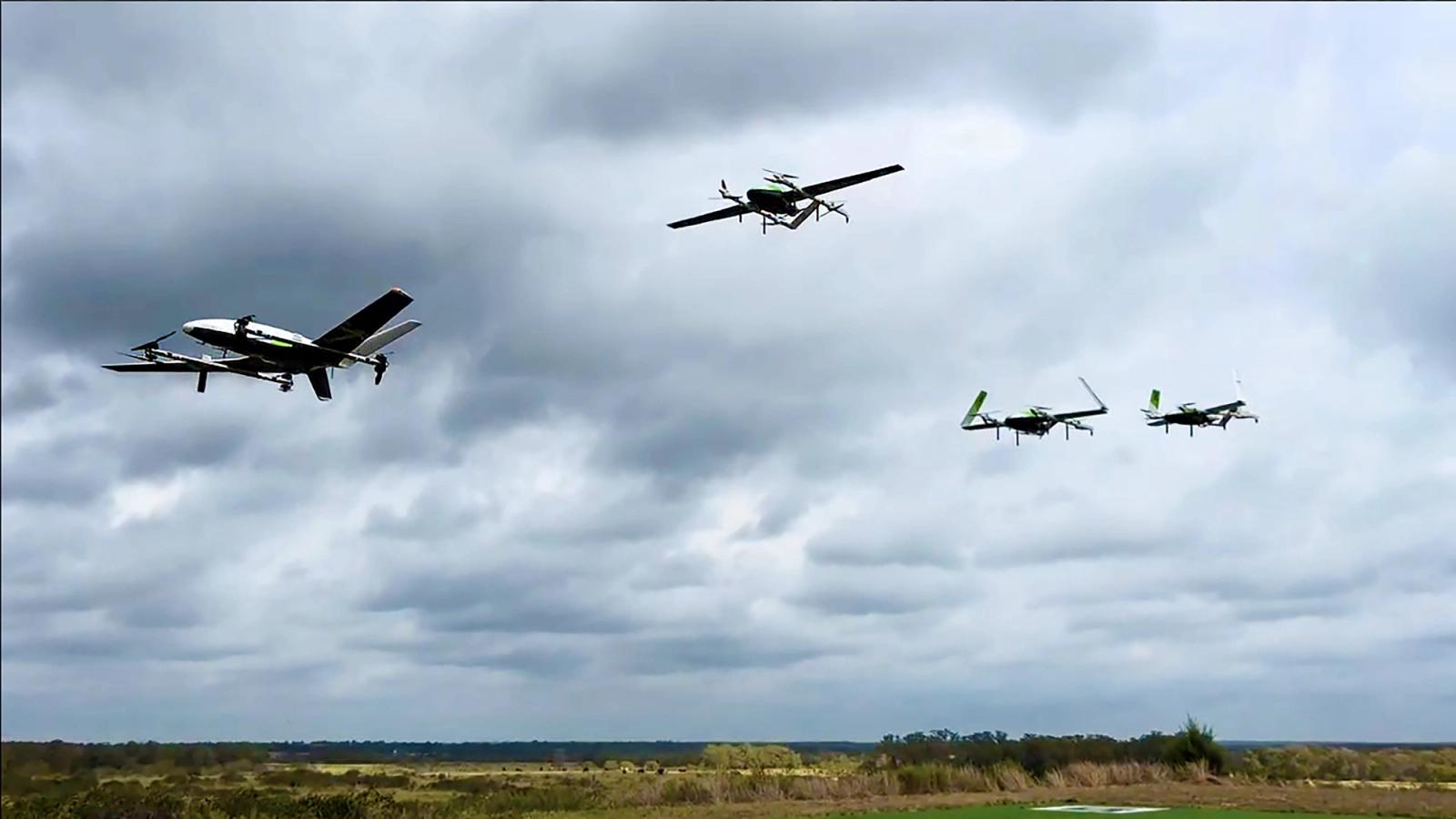
At Skyways' facility, the technology that will change the fundamental economics of cargo drone delivery is being proven: 1:N operations.
While most operations require one operator per aircraft, Skyways is building the automated flight systems that will enable a single operator to manage multiple aircraft simultaneously. The software exists. The capability is being pressure tested. And with every flight, Skyways operators and our customers are learning what 1:N operations will require – workload, decision points, system alerts, emergency procedures.
The principle is straightforward: one operator managing not just one aircraft, but many automated cargo aircraft at once. As Charles Acknin, CEO and Founder of Skyways, frames it: "You need one operator to be able to fly 10, 20, 30, 50 aircraft at a time. Well, for this to happen, you need full-stack autonomy."
The economic implications are immediate and massive. Alberto Gomez, Flight Test Operator at Skyways: "Skyways is going to completely revolutionize logistics deliveries because we will reduce the amount of human labor needed."
Skyways' operations are structured with one clear purpose: proving 1:N works. Every flight generates data on operator workload, system performance, and decision-making under real constraints.
This isn't accidental discovery. It's deliberate optimization to alleviate and reduce operator workload. Our proprietary mission planning software, SkyNav, combined with systems design enables safe supervision of multiple aircraft in many situations today. When that capability goes live for Skyways with FAA authorization – an anticipated next step – it will unlock reliable operations at the scale logistics demands. Gaining access to national airspace via Part 108 will dramatically increase real-world operations, yielding more data and greater optimization – moving us ever faster to autonomous aircraft operating safely in high-demand, high-traffic environments.

The automated flight systems handle takeoff, navigation, collision avoidance, and landing. Operators supervise and intervene only when necessary. Every flight generates data that refines the systems and proves the technology works under real operational constraints.
Since the Wright brothers, aviation has operated with one or more pilots per aircraft. For high-value missions, this works. For smaller payloads to difficult locations, crew costs make operations uneconomical or dangerous.
The consequences show up starkly in defense logistics: $50 million Seahawk helicopters delivering single envelopes between ships. A third of U.S. military casualties in conflicts happen during logistics operations. Offshore wind farms wait days for critical parts.
The traditional model creates a bottleneck that limits what's possible in cargo drone delivery.
The 1:N model doesn't just make individual deliveries more efficient. It enables something fundamentally different: a distributed network where hundreds of precision deliveries happen simultaneously to exact locations across a region.

This is the network Skyways is building. Lightweight hubs that can be established or relocated quickly without the need for a landing strip, giving near limitless opportunities for landing zones. Precision delivery to nearly arbitrary GPS coordinates – a ship at sea, a specific wind turbine, a remote forward operating base, a clinic on an island without a runway.
Maritime and Offshore Operations: Offshore wind farms and oil platforms need parts delivered hundreds of miles offshore. Traditional options take hours or days. Automated cargo aircraft change the timeline from days to minutes. Skyways has demonstrated precision payload drops to offshore wind turbines 20 miles from shore in challenging wind conditions. And because Skyways V2 can travel hundreds of miles depending on load, multiple drops or missions could be performed in a single sortie.
Defense Logistics: Picture a fleet of automated aircraft operating from a handful of forward bases, simultaneously delivering water, batteries, medical supplies, and ammunition to dozens of different locations across theater. Each aircraft makes precision drops exactly where supplies are needed – no established landing zone required. The entire operation directed by one or two operators at ground control stations. No crews exposed. No helicopters waiting on weather or runway availability. Just continuous, distributed resupply at a scale that wasn't previously possible. As Isaac Roberts, Chief Strategy Officer at Skyways, describes it: the ability to react instantaneously to new information and remove logistical footprint from theater entirely.
Inter-Island Logistics: In island nations like Japan, moving cargo between hundreds of islands traditionally requires slow ships or planes that need runways most islands don't have. Skyways' partnership with ANA (All Nippon Airways) demonstrates what a distributed network enables: automated aircraft operating from a few strategically located hubs, making simultaneous deliveries to specific locations across dozens of islands. Medical supplies to a remote clinic. Parts to a fishing vessel. Critical cargo to communities without infrastructure. The delivery location becomes nearly arbitrary. If there are GPS coordinates and space for a precision drop or landing, the network can reach it.

Skyways' platforms – V2 and V3 – use hybrid VTOL propulsion: electric motors for vertical takeoff and landing, fuel-powered engines for long-range cruise. Maximum range: 450 miles for V2, over 1,000 miles for V3, depending on payload. These long-range cargo drones operate without runway infrastructure, enabling missions from ships, offshore platforms, and austere environments.
But hardware alone doesn't deliver 1:N capability. The answer is end-to-end automation – systems where aircraft handle all flight operations and operators supervise. This isn't remote piloting. It's automated flight where onboard systems manage takeoff, navigation, collision avoidance, and landing while humans monitor and intervene only when necessary.
Acknin explains the design philosophy: "When I started Skyways, I figured if we want full autonomy, software is the only solution. We have to build the aircraft essentially around software." The aircraft is designed from the ground up to fly itself, not retrofitted for autonomy.
In automated systems, the flight controller handles operational decisions. Gomez: "One pilot does not have 10 times the workload by controlling 10 aircraft, it's just simply supervising 10 aircraft at the same time."
When deliveries number in the thousands daily, you don't need thousands of operators. You need autonomy sophisticated enough that a smaller ground crew supervises a large fleet. This unlocks efficient, low-cost cargo drone delivery at scale.
The combination of regular testing and real-world mission data from 1:1 flights gathered across three continents is allowing Skyways to develop the backbone of multi-aircraft flight ops – 1:N readiness – in a way competitors can't replicate.
The competitive advantage lies in the machine learning feedback loop. Every flight Skyways flies across the globe generates operational data. Flight logs, videos, sensor readings, edge cases—it all feeds back into the autonomy stack. Aircraft automatically offload data when they land; engineers refine computer vision systems and decision-making algorithms using real-world scenarios.
Acknin explains why this creates a moat: "This data can then be re-injected back into our machine learning pipeline to keep improving this level of autonomy. This feedback loop is what sets us apart from the rest of the industry."
That feedback loop extends beyond real-world flights. SkyNav, Skyways' proprietary navigation and ground control software, enables simulations powered by real operational data – effectively multiplying the learning value of every mission flown and giving engineers the ability to simulate scenarios at scale without waiting for real-world flight opportunities.
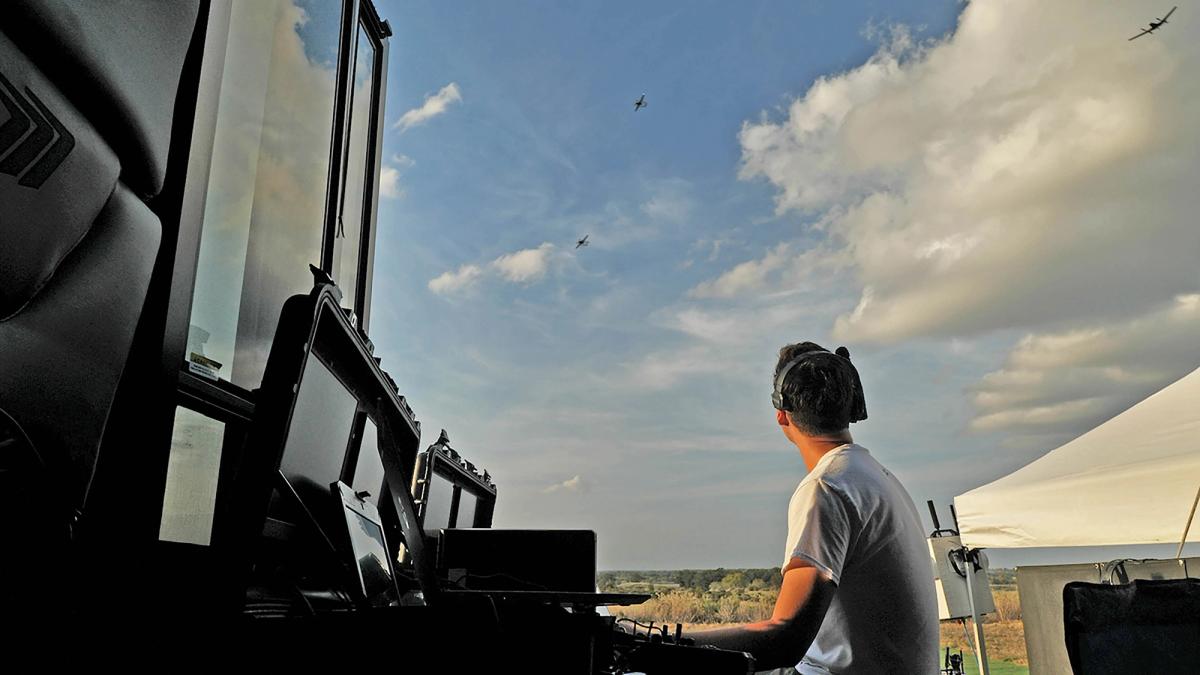
Competitors without aircraft flying in the real world can't generate this data. Simulation doesn't reveal what real operations do.
More flights generate more data, which improves automation but also raises the manufacturing reliability standard that makes scaling the fleet credible. The advantage compounds across software and production simultaneously.
Andrew Fung, Flight Test Engineer, describes insights from multi-aircraft flights that simulation can't provide: understanding how operator workload changes as more aircraft are added, determining which notifications need human attention and which the aircraft can handle in an automated way. When incidents occur during testing, they reveal operator cognitive load and where autonomy needs improvement. For 1:N to work at scale, operators can't be distracted by minor issues when managing dozens of heavy-lift UAVs.
But operational maturity alone doesn't create trust. Integrity does. Skyways operates on a principle: develop capability before talking publicly. Build something real, put it in customers' hands, prove it works, then talk about it. Jessica Hogan, Chief Marketing Officer: "We don't talk about it until we do it. We don't commit to it unless we know that we can deliver."
Customers notice. They see aircraft that match specifications, missions that succeed as planned, and consistent follow-through. That operational credibility unlocks partnerships competitors can't access.
The learning from these demonstrations compounds. Every flight widens the gap.
The goal isn't just more aircraft—it's maintaining or reducing operator headcount as the fleet grows. This means continuing to refine the autonomy stack to handle increasing aircraft per operator and expanding capacity through larger platforms like V3.
But scaling a fleet also requires manufacturing aircraft that perform reliably across hundreds of missions, in real conditions, with consistent results. Acknin is direct about what that curve looks like: "Once you get to phase three, working towards handing off operations to a customer, you need to increase reliability. After that, it just gets steeper and steeper. If you're talking 40 drones, 100 drones, 200 drones – it can be unreliable, so you really need to drive reliability past that." Every mission Skyways completes raises that standard, informing how aircraft are built, what tolerances matter, and where production processes need to tighten. Reliability and production ramp aren't separate workstreams. They're the same problem.
The broader vision extends beyond cargo: proving the model and building regulatory pathways for automated flight more broadly.
Building the world's largest unmanned fleet means proving that autonomy can scale in real-world conditions, that one operator can eventually manage dozens of aircraft simultaneously without compromising safety, and that real operations generate the data necessary to compound competitive advantage over time.

The infrastructure being built today – unmanned cargo aircraft moving toward operational 1:N scale – starts with what happens regularly at Skyways' facility, building the technology and capability required for multi-aircraft flight ops.
Every mission adds to what Skyways knows. Every flight raises the manufacturing standard. And every operation brings the world's largest unmanned fleet one step closer to reality.
1:N in drone operations refers to one operator controlling multiple aircraft simultaneously. At Skyways, this means a single ground control station operator will be able to supervise 10, 50, or even 100 cargo drones at once. This is enabled by full-stack autonomy where onboard systems manage flight, navigation, and collision avoidance while the operator monitors for safety. The 1:N model eliminates the traditional aviation bottleneck of requiring one pilot per aircraft, fundamentally changing the economics of cargo drone delivery.
Automated cargo delivery uses software-driven autonomy that allows aircraft to fly missions with minimal human intervention. Skyways' onboard systems handle all flight management – takeoff, navigation, collision avoidance, and landing – while the operator supervises from a ground control station. Machine learning systems continuously improve flight operations by analyzing data from every mission. The operator's role shifts from active control to monitoring system health and intervening only when necessary, which will enable one person to oversee multiple aircraft simultaneously.
Skyways' V3 heavy-lift cargo drone platform can deliver up to 100 pounds of useful load up to 1,000+ miles (depending on payload) without refueling – enough range to fly from Mexico to Canada without landing. The V2 platform carries up to 30 pounds of useful load up to 450 miles (8 hours flight time, again depending on payload). Both platforms use dual hybrid propulsion combining electric VTOL with fuel-powered cruise flight, featuring vertical takeoff and landing capability, eliminating the need for runway infrastructure and enabling operations from ships, offshore platforms, or any remote location.
VTOL cargo drones reduce logistics costs by eliminating two major expense drivers: infrastructure and manpower. Because they take off and land vertically, VTOL cargo drones require no runway infrastructure – they can operate from ships, offshore platforms, remote sites, or minimal landing zones. Additionally, 1:N autonomy means one operator will be able to manage many aircraft simultaneously rather than requiring dedicated pilots for each aircraft. This combination dramatically reduces the cost per delivery compared to traditional manned aviation or expensive vessel-based logistics.
Defense, offshore energy, maritime logistics, inter-island transportation, and medical supply delivery see immediate benefits from automated cargo delivery. Defense operations use automated drones for expeditionary resupply – delivering water, batteries, medical supplies, and equipment to deployed forces without risking manned helicopter crews. Offshore energy companies deliver parts and supplies to wind turbines and oil platforms hundreds of miles offshore, reducing turbine downtime. Island nations use automated cargo delivery for inter-island logistics and critical healthcare supply delivery to remote facilities.
Dual Hybrid propulsion is unique to Skyways aircraft, combining electric power for vertical takeoff and landing (VTOL) with an internal combustion engine for long-range cruise flight. Skyways aircraft use electric motors driving eight rotors for vertical operations, then transition to fuel-powered forward flight once airborne. This approach delivers the operational flexibility of VTOL (no runway required) with the extended range and payload capacity of traditional fuel-powered aviation. The dual power systems also provide redundancy – if one system fails, the aircraft can still land safely.
Skyways differentiates through real-world operations rather than promises. The company flies paying customer missions regularly, generating operational flight data and customer feedback that continuously improve automated systems through machine learning. This creates a compounding advantage competitors cannot replicate without equivalent operational hours. Skyways' approach focuses on proven reliability and operational maturity – delivering results before public announcements. The company owns and operates the full logistics solution as a service, rather than selling aircraft, ensuring accountability and continuous system improvement.
Flight-as-a-service for cargo drones means Skyways owns and operates the complete logistics solution, going beyond an OEM. Customers contract for ongoing logistics services, while Skyways handles all aircraft operations, maintenance, regulatory compliance, and system improvements. This service model reduces customer risk and capital requirements while giving Skyways operational control to continuously improve the automated systems. It shifts cargo drone delivery from a capital purchase to an operational expense, similar to how companies use shipping services rather than owning delivery trucks.
Ten minutes into our first conversation, you’ll know you found the right partner. We ask the right questions, identify and propose the best solutions, and follow through down to the detail with exemplary build quality.